
Building a Big Brand: Insights from Women in CPG Panel Discussion
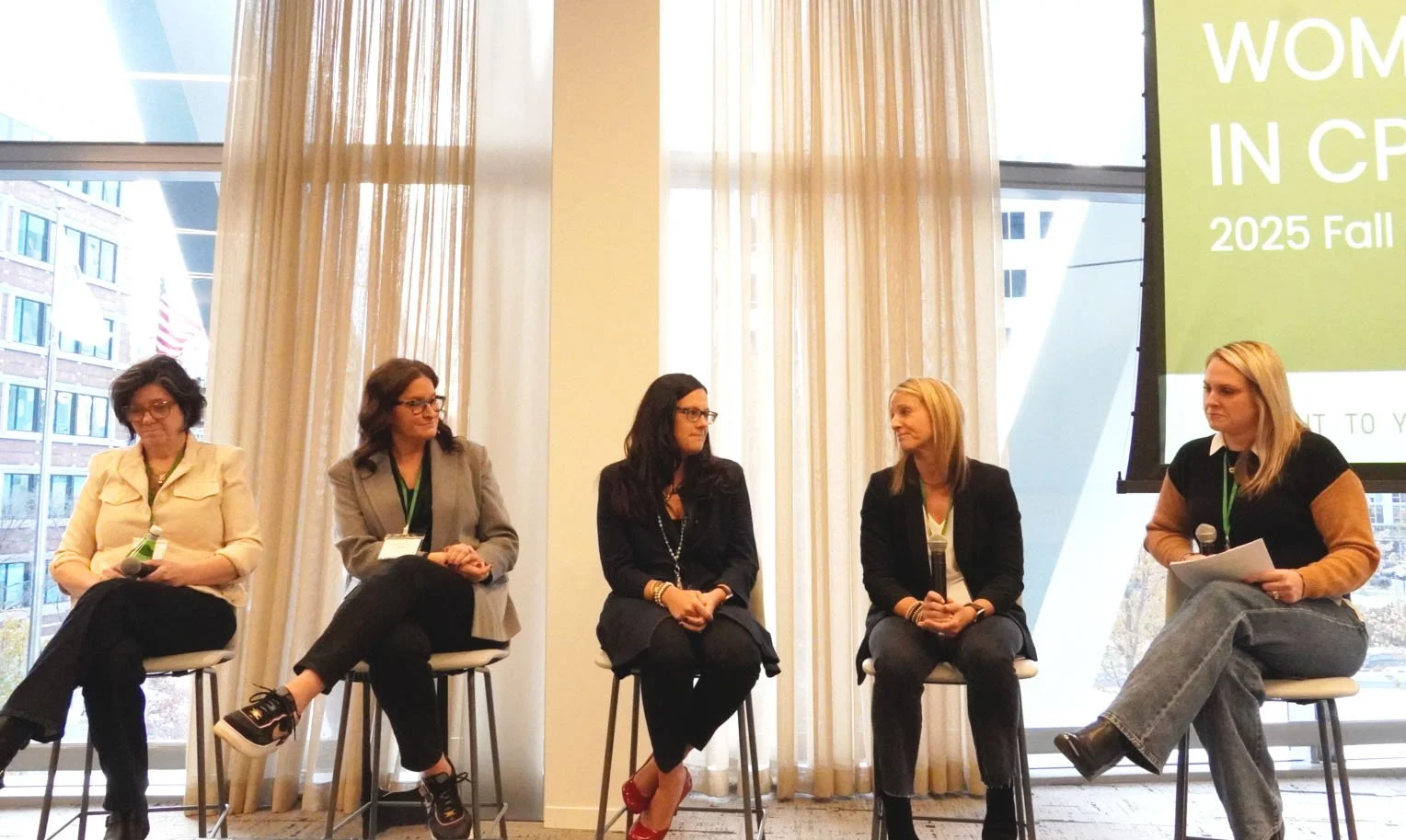
Building a Big Brand panel. Photo by Bob Benenson
Naturally Chicago’s Women in CPG live event on November 11 was a joyous celebration of the leading role women play in the growth of the natural products consumer packaged goods (CPG) industry.
It was also a learning experience for the 200+ attendees who packed the room in Chicago’s BMO building. This article focuses on event’s first panel, titled Building a Big Brand. Future installments will recap both the investor panel and a tribute honoring industry leader Erica Kuhlmann, president/CEO of the Chicago-based Women’s Business Development Center and a longtime associate of Naturally Chicago.
The “Building a Big Brand” panel brought together five standout leaders shaping today’s natural products landscape:
Katie Paul, Vice President of Merchandising, KeHE Distributors and member of the Naturally Chicago Board Executive Committee (Moderator)
Liz Carter, President & COO, Chomps
Julia Gregg-Albers, Vice President of R&D, Barilla Americas, and Naturally Chicago Board Member
Nicole Schumacher, Chief Marketing Officer, PRE Brands
Amy Gibby, Chief Marketing Officer, Every Body Eat
The Building a Big Brand panel offered a masterclass in modern brand building—equal parts strategy, authenticity, innovation and emotional intelligence. From leveraging partners as extensions of the team, to experimenting with MVP models, to using free AI tools as a data engine, the insights were both practical and deeply inspiring.
In an industry built on purpose and passion, these leaders reminded us that the biggest brands grow not through shortcuts, but through clarity, community and courage.
State of the Industry: Transformational Moment for Growth
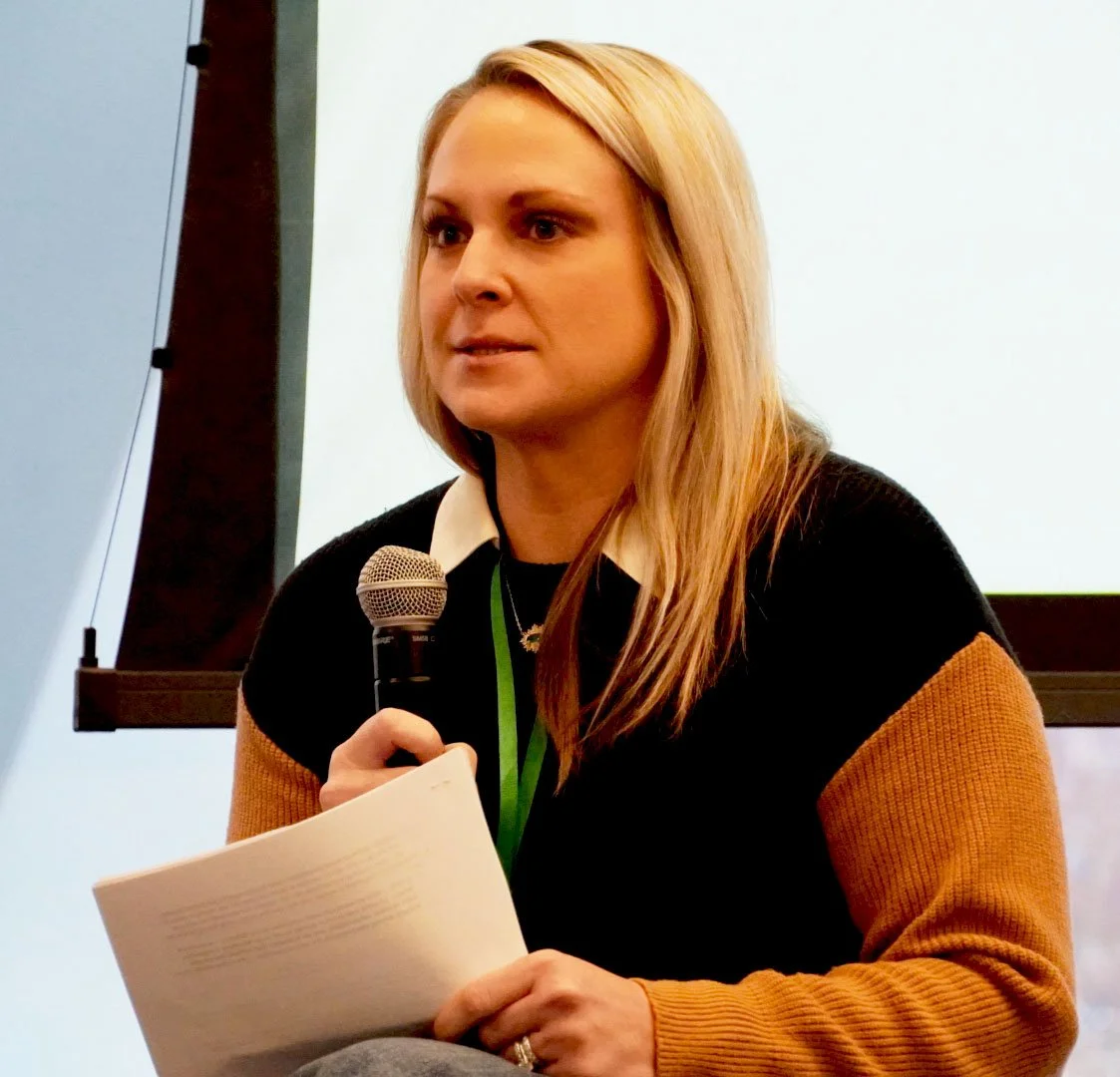
Katie Paul. Photo by Bob Benenson
Moderator Katie Paul set the stage by underscoring the dramatic evolution of KeHE. Over the past decade, the company expanded from $700 million to more than $10 billion in annual sales, solidifying its position as North America’s largest distributor of natural and organic products. This explosive growth reflects the broader momentum of better-for-you brands—yet also signals the increasing complexity of reaching consumers across channels.
Each panelist spoke to that transformative moment from a different angle:
Liz Carter spotlighted Chomps’ surge in popularity through its delicious and sustainably produced meat sticks and the brand’s deep commitment to its organizational culture.
Julia Gregg-Albers highlighted how Barilla Americas is prioritizing innovation, incubation programs and disciplined experimentation.
Nicole Schumacher detailed how PRE Brands has built a true omnichannel strategy, growing assertively through platforms such as Amazon Fresh and Instacart.
Amy Gibby emphasized the power of data-driven decision-making and the discipline of “smart growth.”
“People First” Means Every Partner, Not Just Staff
Katie opened the discussion by asking Liz Carter to expand on Chomps’ stated “people first” philosophy. Liz described an approach that extends far beyond internal staff:
“Your brand is at the center, but you’ve got to think about all your other partners… your vendors, your suppliers, your bankers, your auditors, your tax partners. They’re all an extension of your organization.”
She emphasized that feedback loops—from customers to suppliers to financial partners—are critical. Chomps actively leverages its bankers for key supplier introductions and uses every partner relationship as a strategic advantage.
Katie agreed, noting that passionate founders often try to “do it all” and overlook the ecosystem around them:
“When KeHE is reviewing brands to onboard… the people behind the brand outside of the passionate entrepreneur matter just as much.”
The message was clear: no brand scales alone. The strongest founders intentionally cultivate their extended team.
Growth Strategy: Start Small, Test, Prove, Repeat
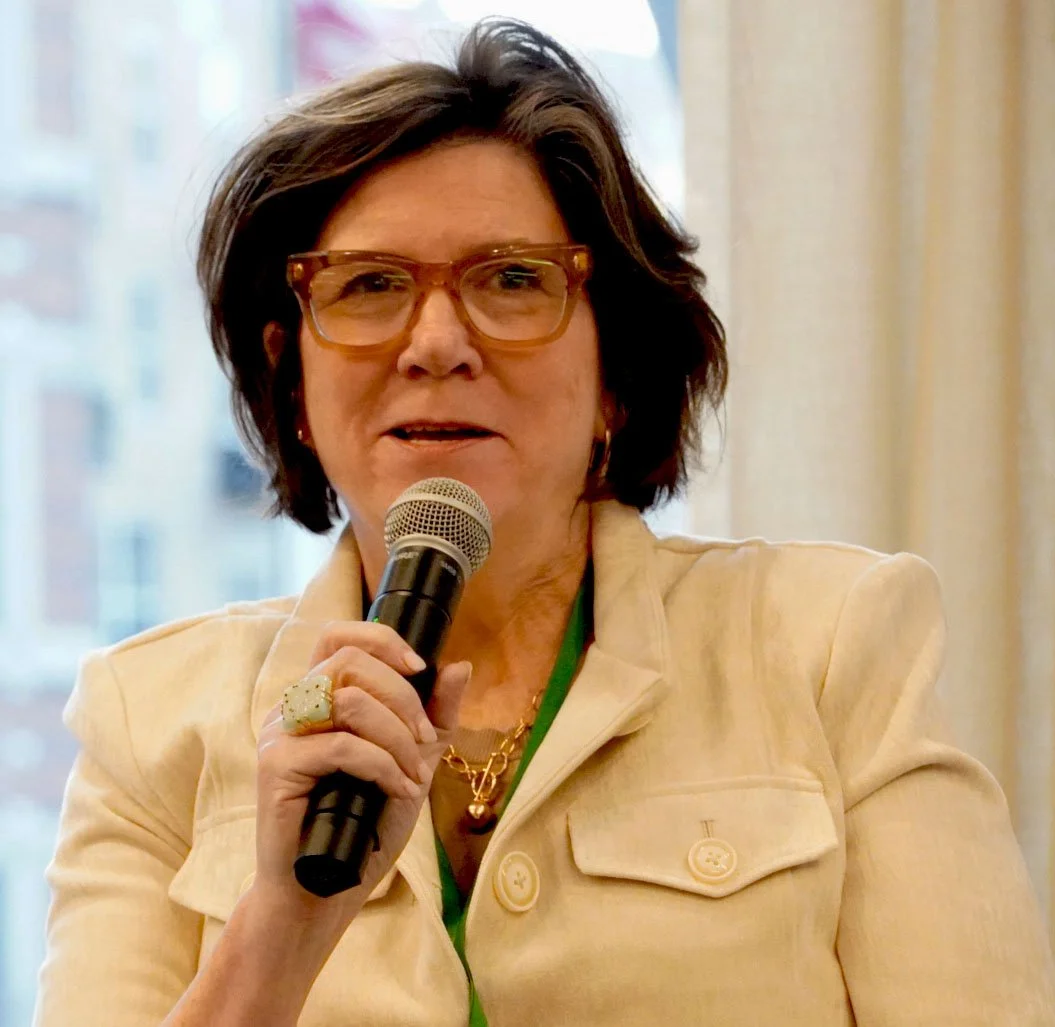
Amy Gibby. Photo by Bob Benenson
When asked to share insights on strategic growth, Amy Gibby of Every Body Eat immediately cited the importance of Minimum Viable Product (MVP) thinking:
“I don’t have to conquer the world, but I do have to set up a test environment to prove that what I want to achieve is achievable in a measurable fashion.”
She emphasized the value of proxy KPIs, iterative learning, and the discipline of taking “1 percent steps forward” toward a longer-term goal.
For early-stage brands, perfect execution matters far less than validated learning.
Rethinking Omnichannel: PRE Brands’ E-Commerce Path

Nicole Schumacher. Photo by Bob Benenson
Nicole Schumacher discussed PRE Brands’ journey toward a truly omnichannel model. Before she joined, the company had invested heavily in trying to build a direct-to-consumer (D2C) channel—but largely without investing in marketing.
COVID-19 became a turning point. Previously, consumers resisted buying meat online, preferring to choose cuts themselves. That changed almost overnight when home delivery became a necessity.
PRE pivoted with purpose:
Built a strong presence on Amazon Fresh
Expanded through Instacart
Developed targeted marketing to support both digital and retail partners
The lesson: omnichannel requires both distribution and creation of demand—not one or the other.
Data on a Budget: “Slow and Steady” Innovation

Julia Gregg-Albers. Photo by Bob Benenson
Katie expressed a challenge facing nearly all startups: They are told to be data-driven, yet the datasets they need—Nielsen, IRI, SPINS—can be prohibitively expensive.
Julia Gregg-Albers offered practical and accessible advice:
“There are free data sources available through AI platforms such as ChatGPT… ask the right questions, try one retailer first, win at that retailer, and use that success to go to another.”
She stressed:
Start with open data and AI tools
Focus on one retailer at a time
Lean heavily on KPIs you control
Upgrade to big-ticket data only when scale justifies it
Her message resonated: data-driven doesn't have to mean data-expensive.
Authenticity and Trust: The Non-Negotiable Brand Currency
When Katie asked about authenticity, Amy delivered one of the most memorable takeaways:
“You’ve got to make trust part of your North Star… start being honest with consumers in a consistent fashion.”
Authenticity, she said, is built through:
Transparency
Consistent communication
Owning mistakes
Creating a relationship before you need forgiveness
In a crowded marketplace, trust becomes the differentiator that money can’t buy.
Advice for Women Building Careers in CPG
The panel closed with a lightning round of advice for women in consumer packaged goods—an industry where women are leaders, innovators, and culture-shapers.
Nicole: “Find your tribe… people you can trust and have very candid conversations with.”
Julia: “If you walk into a room and want to own it, you can own it. Being the only woman doesn’t diminish your power.”
Liz: “Be the person other women can call for support—and be willing to answer.”
Amy: “We do more, we care more, we connect more. Because the work is long and demanding, we must invest in our own sustainability.”
Their collective message: Women must lift one another up, believe in their expertise, and protect their long-term well being.