

The topic of grant funding for early-stage for-profit business can be dry. But the energetic presentation by Sam Shanley, founder of the Funding Trail online grant directory, held the attention of attendees at Naturally Chicago’s Capital Readiness Workshop on October 22. Photo by Bob Benenson
Free Money? Grant Expert Says It’s Out There for Food and Natural Products Businesses to Pursue
Funding Trail website founder Sam Shanley urges entrepreneurs to treat for-profit grants as a “numbers game”
Sam Shanley, founder of the online grant directory Funding Trail, was a featured speaker on October 22 at Naturally Chicago’s “Capital Readiness Workshop,” the non-profit organization’s kickoff to its three-part CPG Growth Series. Taking the microphone at the end of a short program break, he had a great offer for attending food and natural products entrepreneurs who were engaged in conversation.
“If you don’t stop talking, I can’t give you free money,” Sam said. “I am not kidding.”
Sam is a former venture capitalist who spent six years at Adams Street Partners in Chicago. He later co-founded a glamping resort in Michigan, which he and his partner ran for four years before selling it. Since then, he has volunteered as a mentor with SCORE Chicago, which offers free counseling to small business owners.
It was that mentoring that led him to start Funding Trail in January 2025. Nearly every client, Sam said, asked the same questions: How do I get a loan? And where are the grants I’ve heard exist for businesses like mine? There was no good answer that wasn’t a scam, so he built one.
“I was the wrong person to build this,” Sam told the audience, “but nobody else was doing it, so you’re stuck with me.”
What a Grant is, and Isn’t
A grant, Sam explained, is non-repayable funding with no interest and no ownership stake given up, which is why it is sometimes called “non-dilutive funding.”
Government grants often come with strings, typically restricted uses enforced through reimbursement. A city might award $5,000 for a storefront renovation, but the business owner must pay for the work first and submit receipts. Grants from foundations and corporations generally don’t carry those restrictions.
He offered two caveats. A grant won’t fix a business that isn’t working; funders want to see a plan and a business already in action. And his focus is solely on for-profit businesses, since resources for non-profits are plentiful and applications for such grants are far more complicated than most for-profit grants.
Four Flavors of Grants
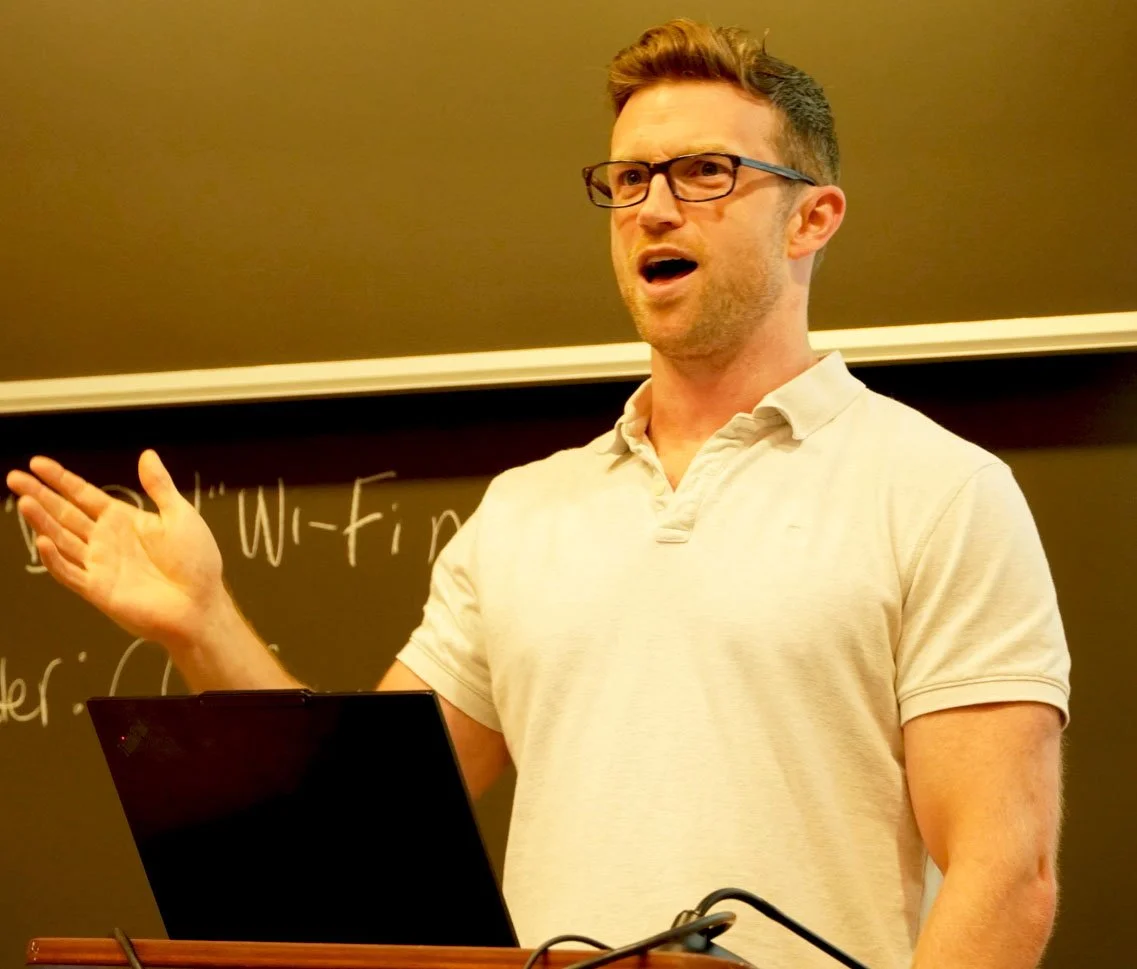
Photo by Bob Benenson
Sam sorted grants by source:
Federal grants tend to be large but focused on industries such as health care, transportation, energy, defense and information technology, so they are less relevant to consumer goods businesses. One exception is the State Trade Expansion Program (STEP), federal money administered by the states. Sam called Illinois’s version one of the best grants available to anyone selling or considering selling products outside the U.S. It can cover an international website, trade show travel and compliance with foreign regulations. Sam said the state doesn’t publish statistics, but anecdotally 30% to 50% of qualified applicants are approved.
State and local grants focus on jobs and building things locally. Manufacturers, retailers and restaurants are favored. Facade grants of $5,000 to $10,000 for storefront improvements are the most common. Chicago’s Small Business Improvement Fund can provide up to $5 million toward buying or developing a building in targeted commercial corridors. Sam also pointed to the Romeoville Startup Grant, a hyperlocal grant program in a southwest Chicago suburb that doesn’t require an established business as an example of the short-lived local programs that “tend to be the best.”
The one he flagged for food businesses was the Illinois Local Food Infrastructure Grant, run by the Illinois Department of Agriculture. Now in its third year, it offers up to $250,000 for food businesses sourcing Illinois products to build distribution systems, warehouses or stores. [The application window for the current $1.8 million pool of grants opened on November 2.]
Corporate grants are highly competitive, Sam said, and companies often spend more advertising them than awarding them. But winners get substantial publicity on top of cash awards. Applications are free and take about 20 minutes, so “throw your hat in the ring.”
He highlighted the Santander Cultivate Small Business Grant, aimed at food businesses, which is expected to reopen soon. The program was once limited to underserved populations, including women-, minority- and veteran-owned businesses and LGBTQ entrepreneurs, but is now open to all applicants nationwide after legal challenges to such programs. Sam said it remains focused on projects in underserved communities, which are more likely to be approved.
Foundation and mission-driven grants come from nonprofits. They are smaller, but less advertised and less competitive. Examples included Veteran Shark Tank, Black Girl Ventures Pitch and the Awesome Foundation, which has given out thousands of $1,000 grants.
Finding Them
Funding Trail’s database, at thefundingtrail.com/grants, is free and, Sam promised, will stay that way. (He said the site uses “the” in front of it only because a squatter wanted $5,000 for the “fundingtrail.com” domain.) He said he updates the database weekly and it listed 630 grants as of his October 22 presentation. As an example, he filtered for Illinois, consumer goods, grants for women and people of color, which narrowed the list to 69.
Sam also publishes a free newsletter every Tuesday, built from about eight hours each Monday of reviewing grant sources by hand, and it highlights new grant listings and deadlines.
Advice from the Q&A
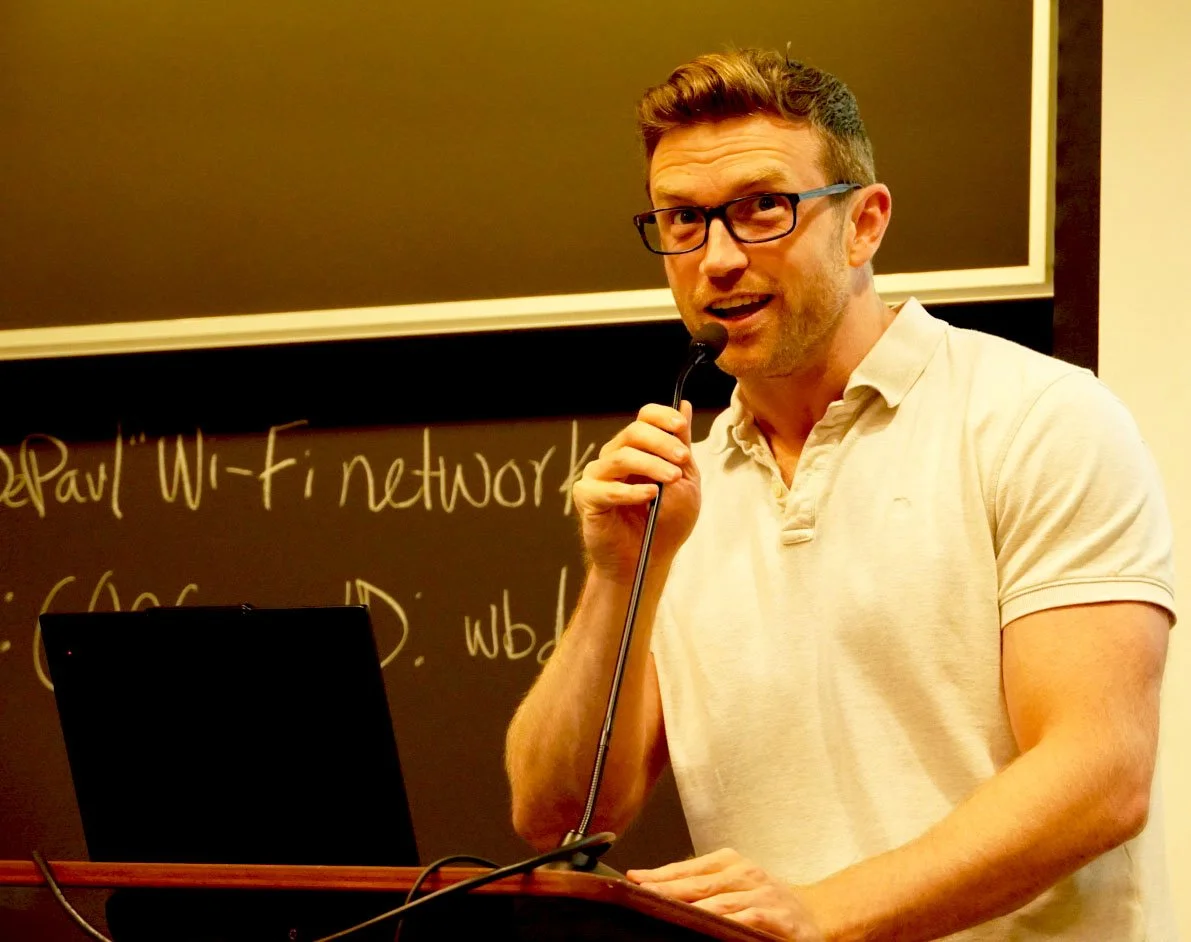
Photo by Bob Benenson
Skip the grant writer. In response to an audience suggestion that Funding Trail add grant writer listings, Sam said for-profit grant applications are simple and called grant writers “scam artists.” The exceptions, he said, are federal SBIR and STTR technology grants, which are complicated enough to justify a consultant.
It’s a numbers game. Odds on any one grant are low, but applications are usually free, short and ask variations of the same five or six questions. One attendee said she keeps a document of past questions and answers to reuse. Sam endorsed that, adding that applicants should tailor narrative answers to the funder’s mission: jobs for government grants, a personal story for mission-driven non-profits.
Reapplying is usually fine. Some grants bar past winners, but outright bans on reapplying are rare, he said, adding with a smile that he doubted funders track applicants closely.
Use AI as an assistant, not an agent. Sam is a believer in AI for first drafts, polishing bullet points and tracking applications, but warned that mass auto-applying produces “polished nothingness” that is easy to spot.
Avoid application fees. Sam excludes fee-based grants from his site, comparing them to “scratchy lottery tickets.” A $20 fee on a $1,000 grant, he noted, means the sponsor profits with just 50 applicants.