
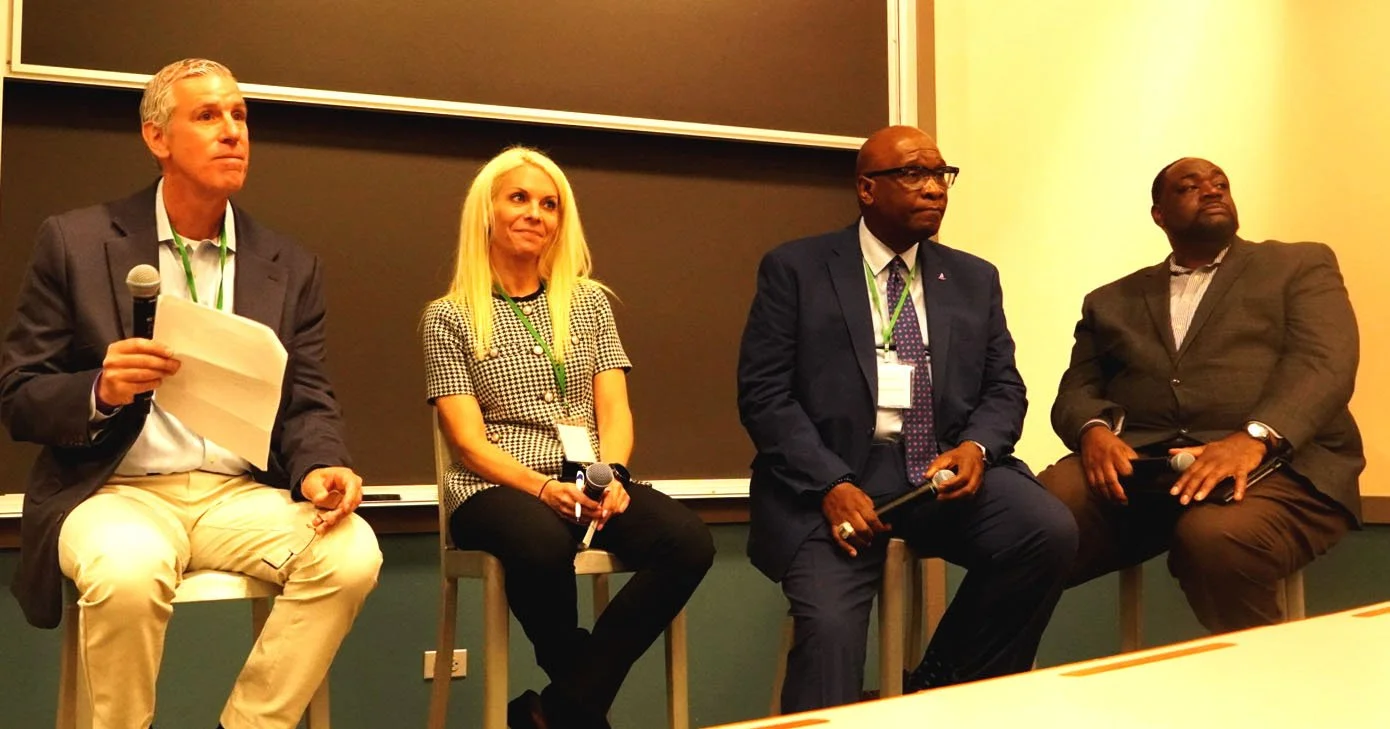
The Debt Financing panel at Naturally Chicago’s October 22 Capital Readiness Workshop (from left): moderator Jim Rolfe of CIBC Bank; Kelly Gumbiner of Women’s Business Development Center; Alex Felton of Pursuit; and Chris Parker of BMO. Photo by Bob Benenson
Lender Panelists Say Numbers, Documentation and Resilience are Key for Early-Stage Brands
Key insights from the Capital Readiness Workshop Debt Financing panel: Be prepared, be realistic, and know that “not yet” doesn’t mean “never”
Two bankers, a community development lender and an advocate for women-owned small business agreed on one thing participated in the debt financing panel at Naturally Chicago’s Capital Readiness Workshop on October 22. And the four agreed on this key point: the best way to land debt financing is to show up prepared, not perfect.
"Debt Financing: What It Takes to Secure Funding" was first panel discussion of the Capital Readiness Workshop. And the Workshop was part 1 of the three-part CPG Growth Series presented by Naturally Chicago, the non-profit association for the Chicago region's natural products consumer packaged goods industry.
The CPG Series kickoff was produced in partnership with the Chicago-based Women's Business Development Center (WBDC).
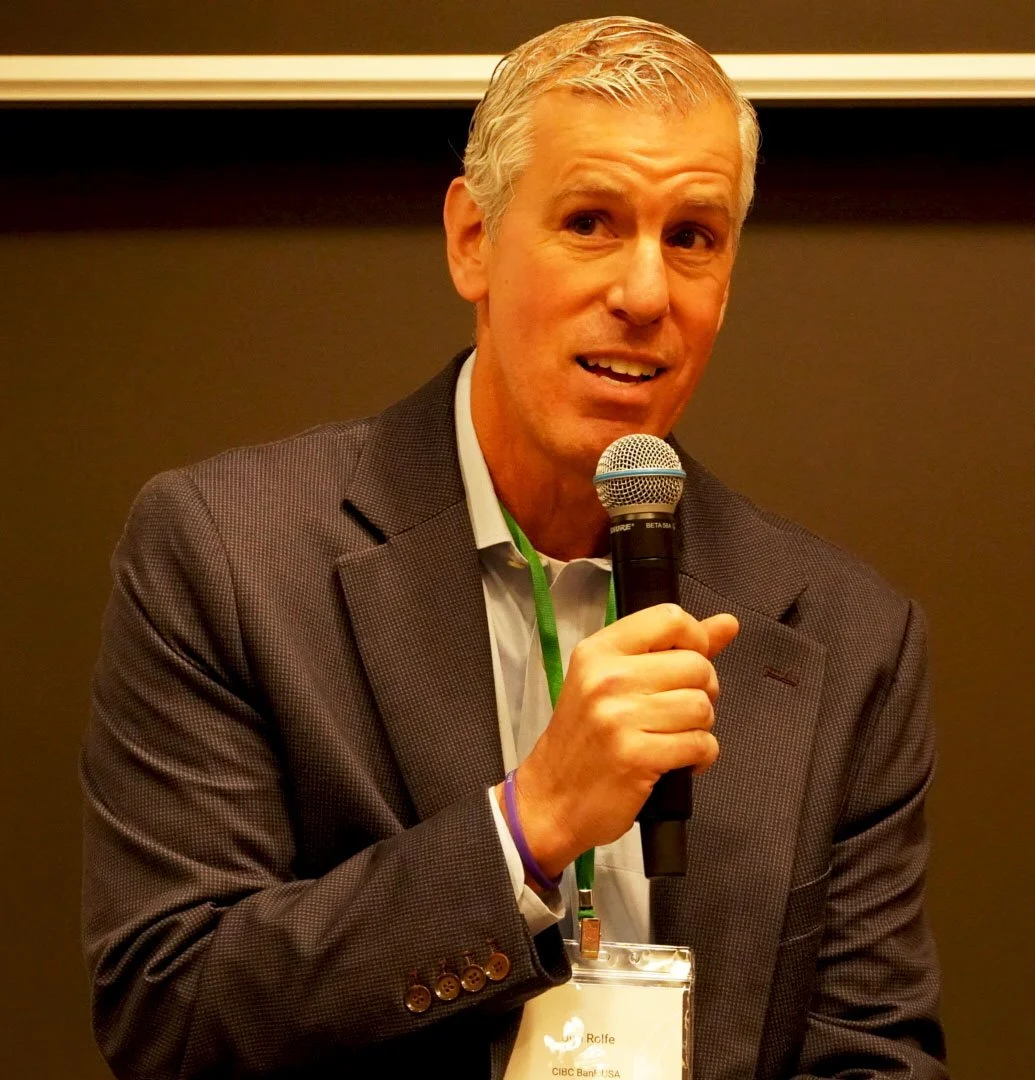
Jim Rolfe. Photo by Bob Benenson
The panel was moderated by Jim Rolfe, managing director and a market lead at CIBC Bank, who said he spends 80 percent to 85 percent of his time working with food and beverage companies. His fellow panelists were Kelly Gumbiner, managing director of WBDC's Access to Capital program; Alex Felton, vice president and senior business development officer with Pursuit, a 70-year-old Community Development Financial Institution (CDFI); and Chris Parker, a senior regional manager with BMO bank.
Funding, Jim told the audience, "is the lifeblood of this industry." The discussion ranged from what lenders look for in a borrower to how to tell a legitimate funder from a predatory one.
Revenue Gets Attention; Predictability Earns Financing
The first question was what "funding ready" really looks like for a food or CPG business. Chris said it comes down to a simple test: "What do you know about your business?"
Banks understand industries in general, he said, but they don't know your business, and you need to show that you do. That means understanding your cash flow and how the company is actually performing. He said the days when owners could hand everything off to a CPA or bookkeeper are over, because capital readiness is about proving you can repay the loan and still grow.
Chris said his first step is a look at the owner's personal credit, followed by business credit, the last two or three years of performance and the owner's projections and growth strategy. His summary: "Revenue gets attention, but predictability earns financing."
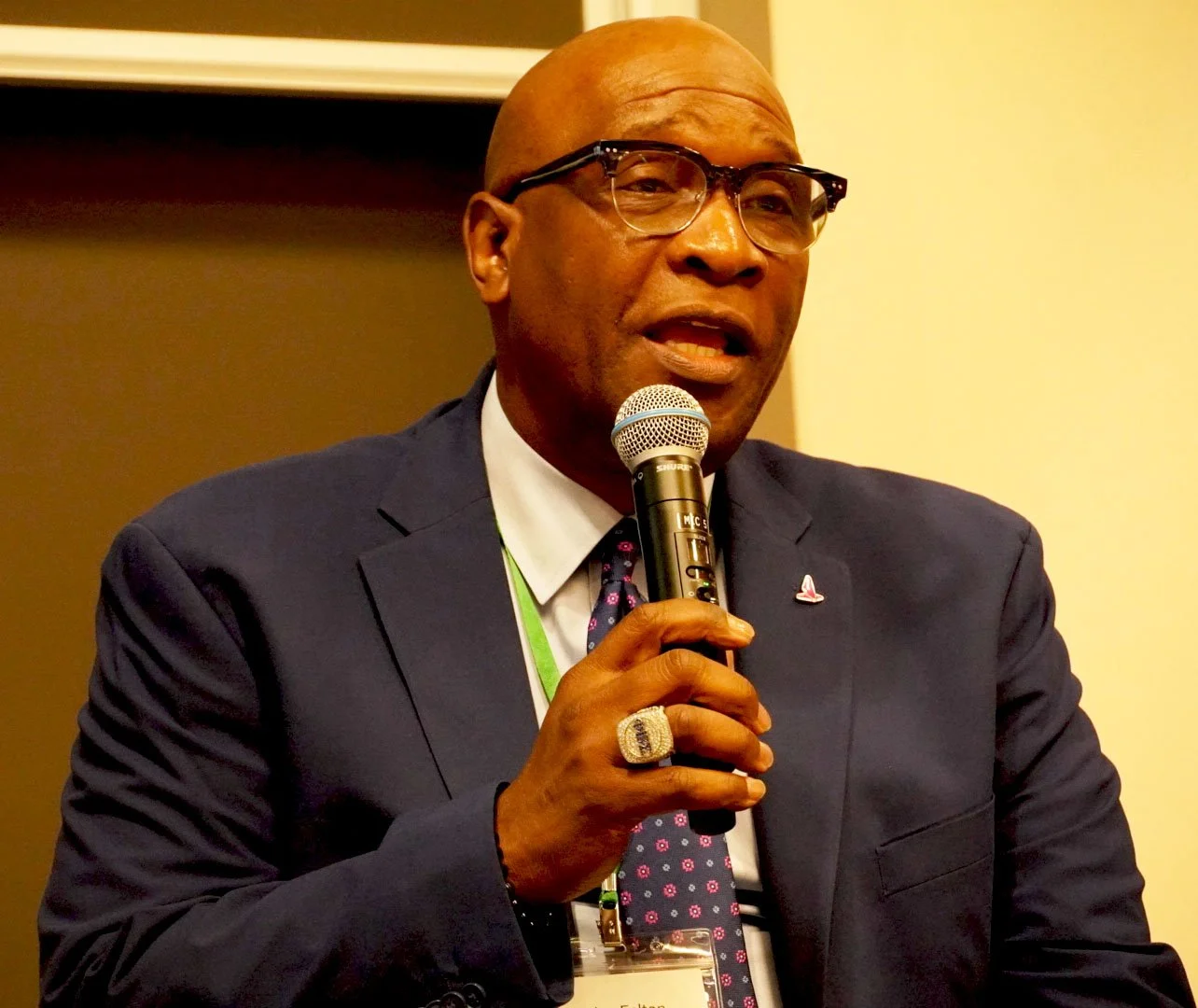
Alex Felton. Photo by Bob Benenson
Alex, who has a gift for kitchen metaphors, put it another way. "How clean is your kitchen?" he asked. Founders need to understand cash inflows and outflows, and how they pay themselves, including any owner's draw. When underwriters look at the numbers, he said, they need to see an ability to repay. Even a CDFI doesn't want to over-leverage a borrower, he added: "We just want to put you in a position of strength, and to do that, we need you to know your numbers."
Kelly said credibility goes hand in hand with preparation. A compelling story isn't enough, she said. There must be evidence backing up the numbers in the business plan, and the projections must match.
Jim added three points of his own.
* Character sometimes matters more than numbers, because lenders want to know the founder is emotionally invested.
* "Cash is king," he said, since plenty of businesses lose money without closing but fail when they run out of cash.
* Founders should know what they don't know and bring in people who are smarter than they are. Chicago is a hub for food and beverage professionals, he said, and many of them are willing to share the lessons of their mistakes.
Is Debt the Answer?
Jim then asked how a lender decides whether financing is the right solution at all, noting that debt and equity are different tools. Debt, he said, is the least expensive form of financing, and for all its cost, it doesn't require giving up ownership. Bringing in outside equity means diluting yourself, he said, "a decision that you have to be very thoughtful about."
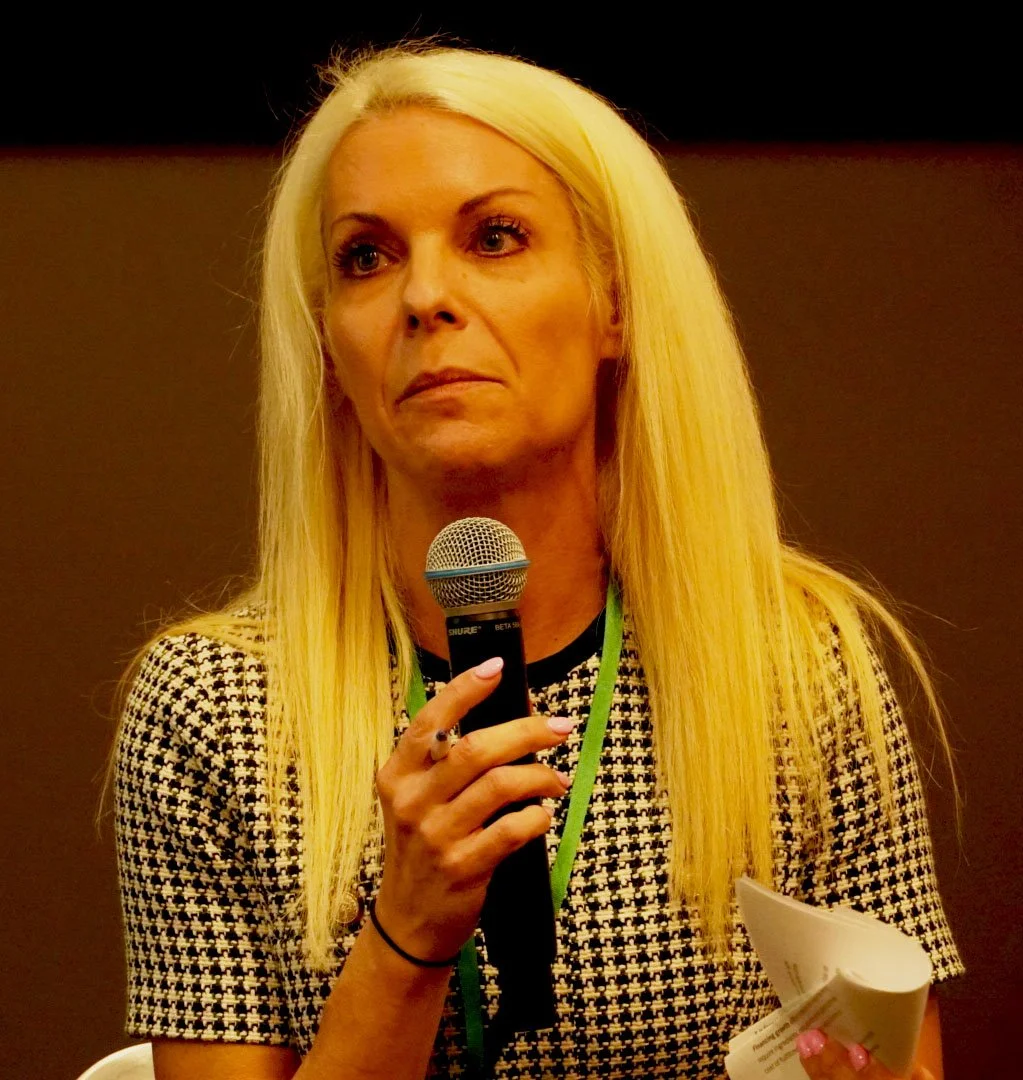
Kelly Gumbiner. Photo by Bob Benenson
Kelly said the financials have to match what is happening in the industry. She described a recent client who needed funding for a roughly $90,000 purchase order and had to demonstrate current assets and liquidity. She cautioned that a seller's note or a loan from friends and family shows up on a balance sheet as debt, and owners who leave their financials entirely to a tax professional may not realize that.
Alex said many borrowers don't understand the difference between a line of credit and a term loan. A line of credit is reviewed over a 12-month period, he said, and what happens in that time determines whether it is later termed out. His question to borrowers: "Why do you want to do a line of credit? What do you need it for?"
Kelly used the moment to promote WBDC's Data to Revenue program, a six-to-eight-week cohort that walks owners through the key business ratios, starting with how they define a unit of product or service, then their break-even point, then profitability. She also stressed that capital is about readiness, not just access. Some owners who took Small Business Administration hardship loans during COVID, she said, discover at the funding table that they can't refinance until those loans are paid off.
Chris added that "all capital is not good capital," and that founders who aren't at a growth stage where capital would help may be better off tweaking their operations to bring in more revenue. Jim, who joked that bankers get a bad rap for offering an umbrella when it isn't raining, advised that when borrowing, "raise more than you think" because there is little downside to having too much liquidity.
What's Your Problem?

Chris Parker. Photo by Bob Benenson
Chris prompted the audience to shout back, twice, "What's your problem?" That, he said, is what every banker is trying to uncover: a cash flow problem, a revenue problem, an operational problem, a marketing problem or an industry-specific one. Founders who can identify the problem and speak to how they will mitigate it, he said, are the ones whose conversations with funders gain steam.
Jim offered a friendlier framing: "challenges and potential risks." Nobody saw COVID coming, he said, and what matters when something goes wrong is not just what happened but why, and what is being done to correct it.
From 'Not Yet' to Funded
What holds back a promising business? Alex said the answer starts with a folder kept as an online or AI file. Founders should assemble tax returns, profit and loss statements, the balance sheet and income statement, and anything else on a lender's checklist, so it's all in hand when they make a presentation to a CDFI, bank or community organization. A founder who says his accountant has the documents is not showing he's prepared, Alex said, adding, "Is your accountant going to give you this money?"
Chris made a key point about resilience, saying a "not yet" from a bank is not the end of the conversation, and for many businesses it becomes the point at which they change course. He listed the most common reasons lenders say it: incomplete financial records, which he called the number one reason; founders who aren't operationally ready for growth; and personal credit problems. Lenders also look at global cash flow, he said, and owners who push their business while not paying themselves can run into trouble.
But with 25 years in business banking behind him, Chris said there are more options today than ever. "Do not take no for an answer," he said, urging founders to shop around, because "you never know which funder has the appetite for what you're looking for."
Jim called on founders to "respectfully demand transparency" from lenders, who should give specific reasons for a no and say what it would take to get to yes. He also warned that entrepreneurs who are natural salespeople can chase revenue at the expense of profit. Growing from $10 million to $20 million is great, he said, but the question is whether it was done profitably: "It's one thing to get on shelf; it's another thing to stay on shelf."
One Thing to Start Doing Today
Asked what founders should start doing now to be in a stronger funding position a year from now, the panelists offered four answers:
Kelly: Take a hard look at your tax returns, including net income, because they will serve as evidence for what you present to a lender. "Capital is progression, not transactional," she said.
Chris: Look at your financials every day: income, revenue and expenses. Doing so shapes your questions and shows who you need in your corner.
Alex: Watch your distributions and your cash position quarterly, and pay yourself, even a small owner's draw. "If you're not paying yourself, how you gonna pay us?" he asked.
Jim: Be able to answer why your business exists. "There's 1,000 protein bars, there's 1,000 waters," he said.
Q&A: Credit Scores, Predatory Lenders, and Equity
In the audience Q&A, a founder asked about growth stages and financing. Alex said he has worked with people with 700 credit scores who were turned down and others below 640 who were approved because they had cash flow. Ultimately, he said, it comes down to the ability to repay.
Chris said banks are increasingly studying industry-specific trends and urged founders to build a team of a business banker, an accountant, an insurance broker and a lawyer who know the industry.
Kelly noted that the SBA reported earlier this year a 30 percent increase in online lenders. Integrated offers from platforms such as Shopify can make cash look easy to get, she said, but predatory lending is a growing challenge in the market.
Lisa Marsh of Ms. P's Gluten Free said she gets texts and emails about 10 times a day offering $200,000 or other deals and asked how owners can distinguish predatory lenders from legitimate ones. Alex's answer was to know your CDFI, which he described as a shield between borrowers and predatory lenders. Jim advised using your network and asking others, even competitors, how and where they secured funding. "Lending is a people business," he said.
Alex asked for a show of hands on how many in the room actually go out and network, and how many know what a CDFI is. He said Pursuit is the oldest CDFI in the country. Jim added that everyone you meet is a customer, a prospect or a referral source, and that a lender who can't help should refer you to someone who can.
On when a company is ready for debt, Jim said that is after the family-and-friends money and savings are spent, past proof of concept, post-revenue and ideally EBITDA positive, though programs represented on the panel can help earlier-stage companies. Kelly said WBDC is a trustee for Kiva, a public fundraising platform suited to early-stage businesses that may not yet have tax returns to show. Chris reminded the audience that debt comes at a cost, and that depending on readiness, "sometimes you pay more." Jim's rejoinder: "It's still cheaper than equity."
Finally, a founder with a proof-of-concept product asked how to choose between debt and equity. Alex said he'd want to see two years of projections, a business plan and what he called a business resume, a narrative of the founder's experience. A CDFI, he said, is "just a starting point."