Using Amazon Data to Grow Sales: Assess, Diagnose, Act — 11/5/26 Naturally ChicagoWebinar
Experts from Amazon and Jungle Scout highlighted how emerging food and beverage brands can use the companies’ data
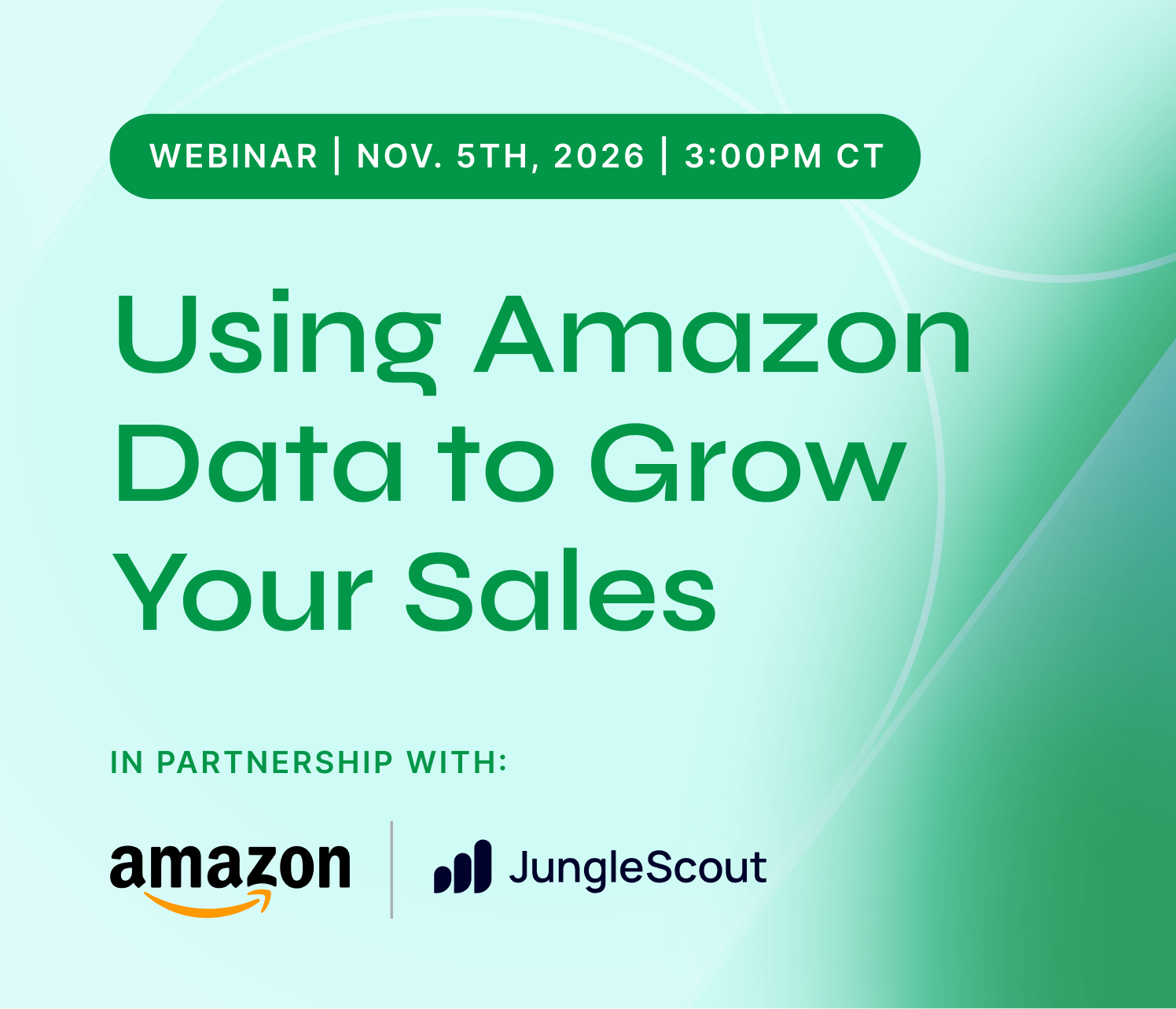
Growth on Amazon rarely comes from one big move, and the data brands need to make the right moves is already available to them. This was the core message from executives of Amazon and Jungle Scout during a Nov. 5 Naturally Chicago webinar.
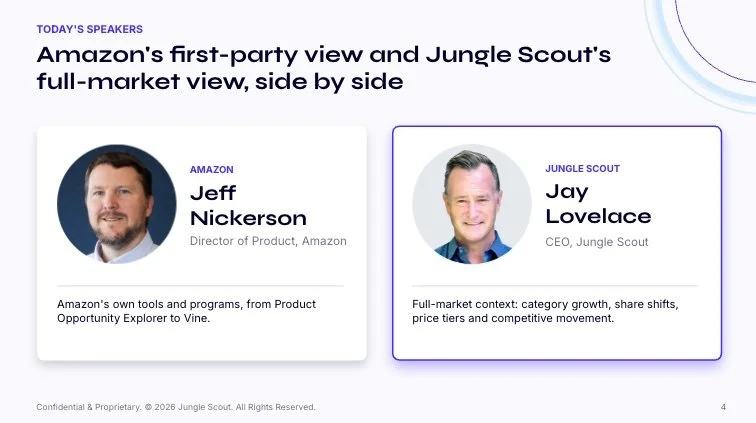
The session, "Using Amazon Data to Grow Sales," was presented by Naturally Chicago in its role as the non-profit association for the Chicago region's natural products consumer packaged goods industry. Greg Keller, brands lead and head of the Locally Made program at Naturally Chicago, moderated a conversation between Jeff Nickerson, director of New Selection Success at Amazon, and Jay Lovelace, CEO of Jungle Scout and a former president of SPINS.
While Amazon is known almost universally, the webinar provided an opportunity for Jungle Scout to connect with those who are not already aware of their services. With the most complete Amazon intelligence, Jungle Scout connects every revenue lever – from category benchmarking and pricing to product innovation, reseller control, and advertising performance. Jungle Scout brings that intelligence directly into the AI workflows your team already uses, turning a simple prompt into a full Amazon analysis.
The presenters organized their advice around a three-step framework: Assess where your brand stands, Diagnose what is driving your numbers, and Act on the moves with the biggest payoff. The framework is drawn from a Playbook that Jungle Scout developed in collaboration with Amazon.
Greg noted at the outset that Amazon is a business "all of us in the emerging brand space are or should be using," and that most of the retailer's growth in grocery comes from specialty, natural and gourmet brands — the main focus of Naturally Chicago’s work.
A poll of attendees at the start of the session showed where the audience stands. About 40 percent said they are new to Amazon, 45 percent said they see opportunities and want to grow, and about 15 percent said they are doing well and happy with their results. Greg noted that new brands and growth-seekers clearly predominate.
Two Sets of Data
Jeff said no single source will give a brand everything it needs to run its e-commerce business. Amazon's own data shows what customers are searching for, clicking on, adding to their carts and buying, while outside providers such as Jungle Scout supply the wider context of category growth rates, shifting share and competitor activity.
Jay said Jungle Scout has been around for about 12 years, has partnered with Amazon throughout that time, and has worked with more than a million sellers and brands. He also stressed Amazon's weight in the market, saying it accounts for 40 percent to 45 percent of U.S. e-commerce sales and is growing.
Later, in response to a question about whether trends on Amazon mirror those in brick-and-mortar grocery, he said Amazon’s scale makes it a strong proxy.
Step One: Assess
The first step, Jay said, is knowing how big your category is, how fast it is growing, how much of it you own, and determining whether a problem is specific to your brand or part of something bigger in the category.
He used Amazon's grocery and gourmet food category as an example. It generated just under $18 billion in sales over the past 52 weeks, up almost 8.5 percent, while unit sales rose almost 14 percent. The average price fell almost 5 percent, meaning shoppers are buying more items at lower prices.
That, he said, should prompt brands to think about pack size and category growth before setting prices. The category includes about 49,000 brands and some 700,000 ASINs, or Amazon Standard Identification Numbers, which Jay described as the equivalent of a UPC in brick-and-mortar retail.
Jay suggested that brands look at the category differently depending on their stage.
New brands should check whether demand is durable or is being inflated by promotions, seasonality or a social media influencer. They should also ask how concentrated the category is and which price tiers are growing.
Brands looking to expand should examine which flavors, formats and pack sizes are gaining share, and whether category leaders are absent from any niche. Established brands should ask whether their share is keeping pace with the category, who is taking share, and at what price.
He urged brands to watch for new entrants that can "steal share overnight" with something innovative.
Prebiotic soda served as his example. Category revenue grew 54 percent in the past year, with unit sales up 77 percent and the average price down about 13 percent. Eighteen new brands have entered in two years, including two in the last quarter. Poppi lost almost 19 points of share in the past year and Olipop held roughly steady — while Bloom Nutrition rose from about 1 percent of the category to almost 18 percent.
Greg observed that the same thinking brands apply in conventional retail applies on Amazon: Where am I, where are my competitors, what is growing, and am I keeping pace?
Amazon's Research Tools
Jeff then described tools Amazon offers to help brands research new products. Product Opportunity Explorer shows what customers are searching for, clicking and converting on, along with insights from reviews and returns. It focuses on "unmet demand," meaning searches that Amazon expects to convert at a higher rate than they do, which signals that something is missing from the products on offer — a gap that new products have the potential to fill.
Amazon has also added a machine learning-based tool that identifies opportunities down to the specific product features likely to have high potential, and in the past couple of months launched a tool that lets sellers simulate a launch by entering a price, title and keywords to get a competitive assessment. Jeff said Amazon research shows sellers who used Product Opportunity Explorer had on average 150 percent higher sales potential in their first three months than similar launches that did not.
He also pointed to Amazon Brand Analytics, which includes a search query performance dashboard showing keyword trends and a market basket analysis showing what customers buy together, which can reveal bundling or partnership opportunities with other brands. His advice: use the data to shape strategy, then reassess regularly, because categories can change quickly.
Step Two: Diagnose
The second step is determining the cause of a change in sales before acting on it. Jay warned against what he called the "symptom trap." A gap to fix might be a competitor's price cut or value pack, a lost Buy Box, a lost priority keyword, slipping ratings or content that no longer matches what shoppers want. Momentum to scale is indicated when share is rising faster than the category, conversion holds as traffic grows, repeat purchases climb, or a particular flavor, format or pack size pulls ahead.
His advice is to check the category before the listing. "Growing 9 percent in a category that grew 54 percent still means losing share," Jay said, adding that many sellers tell him they are growing 12 percent when their category is up 30 percent.
In the prebiotic soda example, price was not the explanation, because the top three brands sell within $1.50 of each other. He suggested checking which brands win the category's top searches, and whether flavor or pack size explains the shifts. RXBAR, he said, grew 11 percent in a category that rose 25 percent, but would have grown only 4 percent without product innovation led by its protein energy bites.
Jay and Greg both noted that closing a gap does not necessarily mean spending more. "It doesn't always mean budget," Jay said. "It just means understanding the data."
Mining Reviews
Jeff said reviews measure what customers expected versus what they experienced, and can reveal problems with listings, pricing, features or repeat purchase likelihood. He pointed to three Amazon sources: Voice of Customer, which aggregates review and return data to spot issues such as manufacturing problems or emerging trends that could affect star ratings; Product Opportunity Explorer, which synthesizes review themes across a category; and a customer reviews tool that shows verbatim reviews of a brand over the past 90 days.
Competitors' reviews are especially valuable, he said. If customers complain about a taste, a texture or an ingredient, solving that problem points to a real market opportunity.
Greg said this kind of insight is unavailable in conventional grocery retail unless you are standing in the store. Jeff added that it is "so easy to spend money unproductively" by assuming a sales drop calls for more ad spending without learning the root cause, whether that is negative reviews, discovery problems or a new competitor.
Step Three: Act
Jeff's first piece of advice for the acting phase was not to try to do everything at once. Pick the one or two most important moves, he said, so you can tell what is working. The two big levers are optimizing what you already sell and introducing something new.
On keywords, he said they bridge what customers search for and whether they find your brand. He recommended using Search Query Performance data to see a brand's share of impressions and clicks, and focusing on searches when the product has something unique to offer and converts well, since poorly converting keywords waste ad dollars.
For advertising, he said brands with a new product and no keyword list can start with automatic Sponsored Products campaigns, which use Amazon's AI to pick keywords, and then use the results to build manual campaigns that concentrate spending on the best performers.
Jay turned to innovation, noting that consumers want function from everyday products and that the better-for-you movement continues to gain momentum. He cited two fast-growing subcategories, gourmet food and vitamins, minerals and supplements. The latter category is up almost 21 percent, compared with 8.5 percent for grocery overall.
His case study was creatine, which grew its share from just under 4 percent to almost 8 percent by pulling three levers. A gummy format took its share from almost 12.5 percent to 17 percent, a sour peach flavor became its top seller within a year, and a 30-count single-serve pack sold at about $59 on average versus about $48 for its previous average. Brands often use Amazon as a test environment, he said.
AI Agents for Small Teams
Jay acknowledged that many brands, especially those in the early stages, lack analysts to dig through this data. He said Jungle Scout has redesigned its platform around AI agents that answer plain-language questions, such as who is winning the Buy Box and what it costs, or which ad spend is not producing sales. The agents handle monitoring tasks such as brand share, category trends, seasonality and consumer sentiment, and can deliver reports or spreadsheets on a set schedule. Jungle Scout's platform can also be connected to AI assistants such as ChatGPT or Claude.
Audience Questions
In the question-and-answer period, Jeff advised brands deciding which keywords to target on high-volume searches to focus on the audiences most likely to convert and become advocates, and to run inexpensive tests and then "double down" where results are strongest. Brands unsure about advertising can hire an agency, he said.
Asked whether regional brands should sell on Amazon, both said yes. Jay said shoppers discover and compare brands on Amazon. Jeff said it also shows how much demand exists beyond a brand's home region, since customers who move around often seek out brands that are big elsewhere.
For brands entering crowded categories, Jay recommended a data strategy and a scientific approach, and said a brand should consider an adjacent segment if a category is overwhelmed. "Be you, be different," Jeff added. "Solve a real problem."
On launching new products alongside legacy ones, Jeff said Amazon is investing in early discovery for high-potential items, and offers Vine, a program that gives free samples to customers who then write reviews, to help overcome the "cold start" problem. New AI tools, he said, can compare a product to its nearest competitors and help decide how much to spend on advertising, whether to run a promotion and how fast to deliver promises customers expect.
As for how long to run a test, Jeff said sellers often cite 90 days for a new product, with sales generally settling into a steadier run rate within 90 to 180 days. Jay agreed that 90 days is usually a safe bet.
Key Takeaways
Jay closed with four takeaways: measure growth against the market, identify root causes of changes in sales and share, invest for conversion where demand exists, and maintain continuity by using automated tools to keep watch.
He also offered Jungle Scout's mobile app free for 30 days to brands that are not current customers, with details available through a direct message to him (Jay Lovelace) on LinkedIn.
Jeff thanked the audience and said new product introduction is "such an important part of growth."