
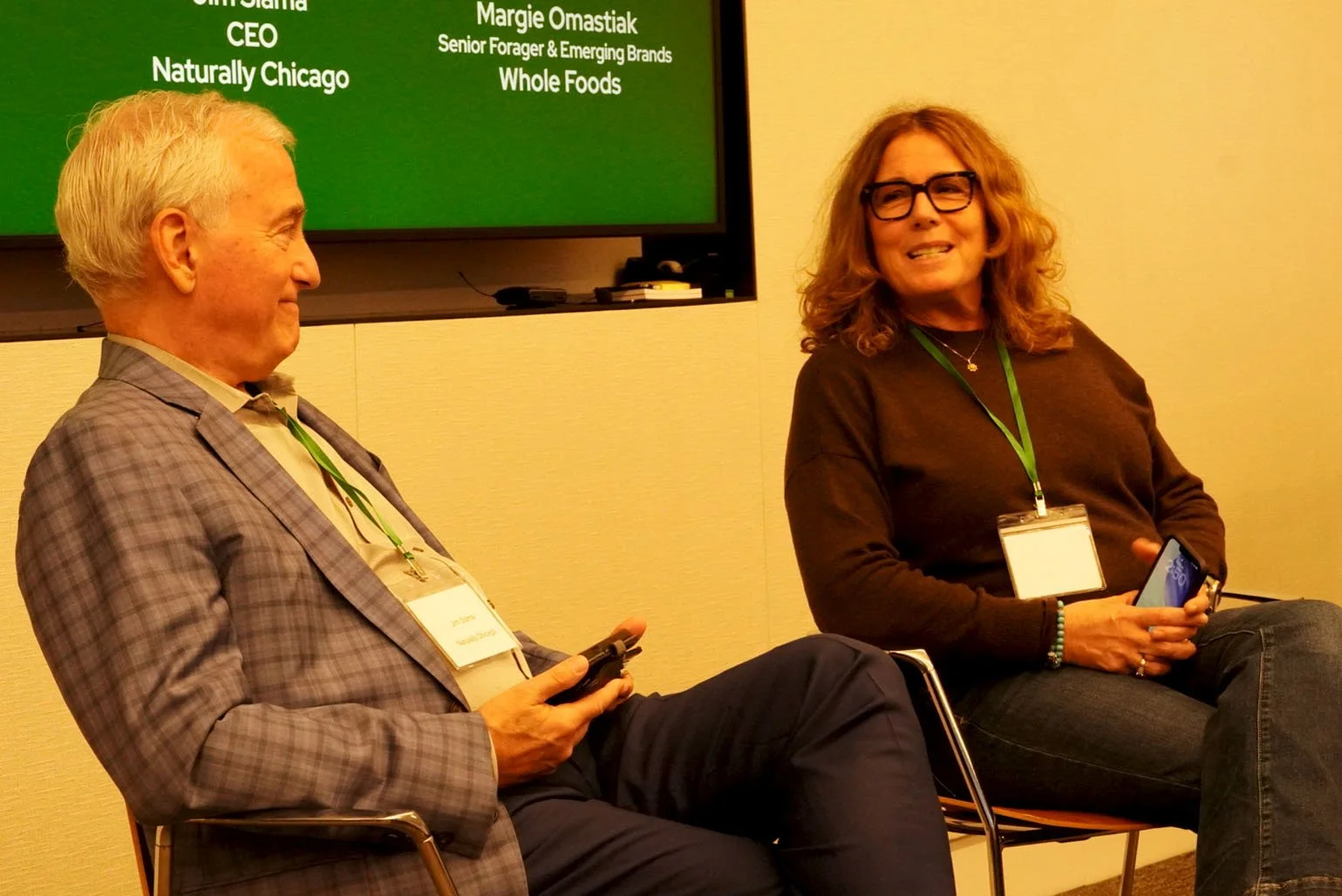
Whole Foods senior brand forager Margie Omastiak and Naturally Chicago CEO Jim Slama during their fireside chat during the Innovation and Product Development Intensive on November 5. Photo by Bob Benenson
WHOLE FOODS’ MARGIE OMASTIAK TO BRANDS: “DON’T CHASE TRENDS, JUST BE THEM”
Featured at Naturally Chicago’s Innovation and Product Development Intensive, the chain’s senior Midwest forager laid out what it takes to land and stay on shelves at Whole Foods Market.
Margie Omastiak has an early résumé that wends from a freight brokerage to a macrobiotic restaurant to overseas farmland. She says that route prepared her well for a career of more than three decades with the Whole Foods Market chain and her current job — finding the Midwest’s rising CPG brands for Whole Foods’ shelves.
Margie, the chain’s Senior Midwest Forager for Local and Emerging Brands, shared her career story and her advice for CPG entrepreneurs in a fireside chat with Jim Slama, founder and CEO of Naturally Chicago. The conversation was one of three segments at the Innovation and Product Development Intensive, held on November 6 at Bank of America’s Chicago headquarters and the second installment of Naturally Chicago’s three-part CPG Growth Series.
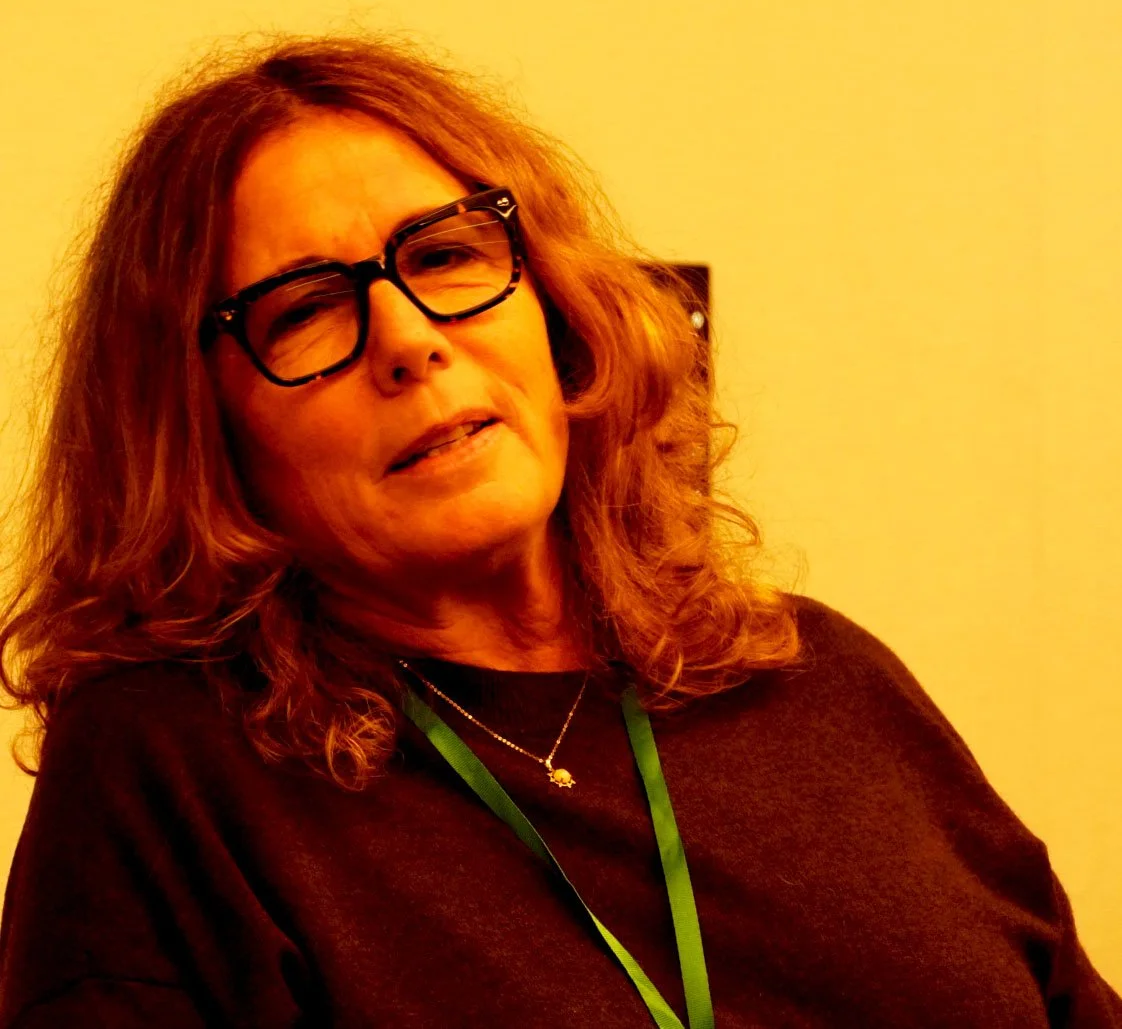
Photo by Bob Benenson
Winding Road to Forager Role
“It is a winding road, y’all,” Margie said of her career path. She has spent 33 years at Whole Foods, but she had a full work life before that. She opened a trucking company and brokered freight across the country after deregulation, which taught her “how hard it is to get a product from one end of the country to the other.” She also worked in small natural food stores, where suppliers were always pitching something new, and in a macrobiotic vegetarian restaurant called Living Water. The restaurant had an affiliate, Living Bread, whose sprouted breads she said are still hard to match. She later went overseas, developed land and cultivated gardens to supply the restaurant.
When Whole Foods came to Chicago in 1993, she saw that a career in natural foods might be possible after all. She began in a meat department, using her culinary skills to develop an “oven ready” program of easy-to-prepare foods. She then worked nearly every job in the store, from sweeping floors to stocking shelves, before moving into a regional role. She spent 29 of her 33 years in wellness and beauty before joining the forager team, now called the Local and Emerging Brands team.
She was initially unsure what “forager” meant, but she realized that “I’m a shopper, just like everybody else.” She called it “a dream job.”
Where New Brands Come From
Margie said she finds brands in many ways. She added, “Sometimes the best brands find me.”
She visits farmers markets, which generate “some of the best brands that you can find” because their founders are eager and have great stories. She attends every trade show that makes sense, including Natural Products Expo West, held every March in Anaheim, California.
She also relies on partners such as Naturally Chicago and on Whole Foods merchants who spot products that might work in the Midwest. Those products are tested together with the foragers.
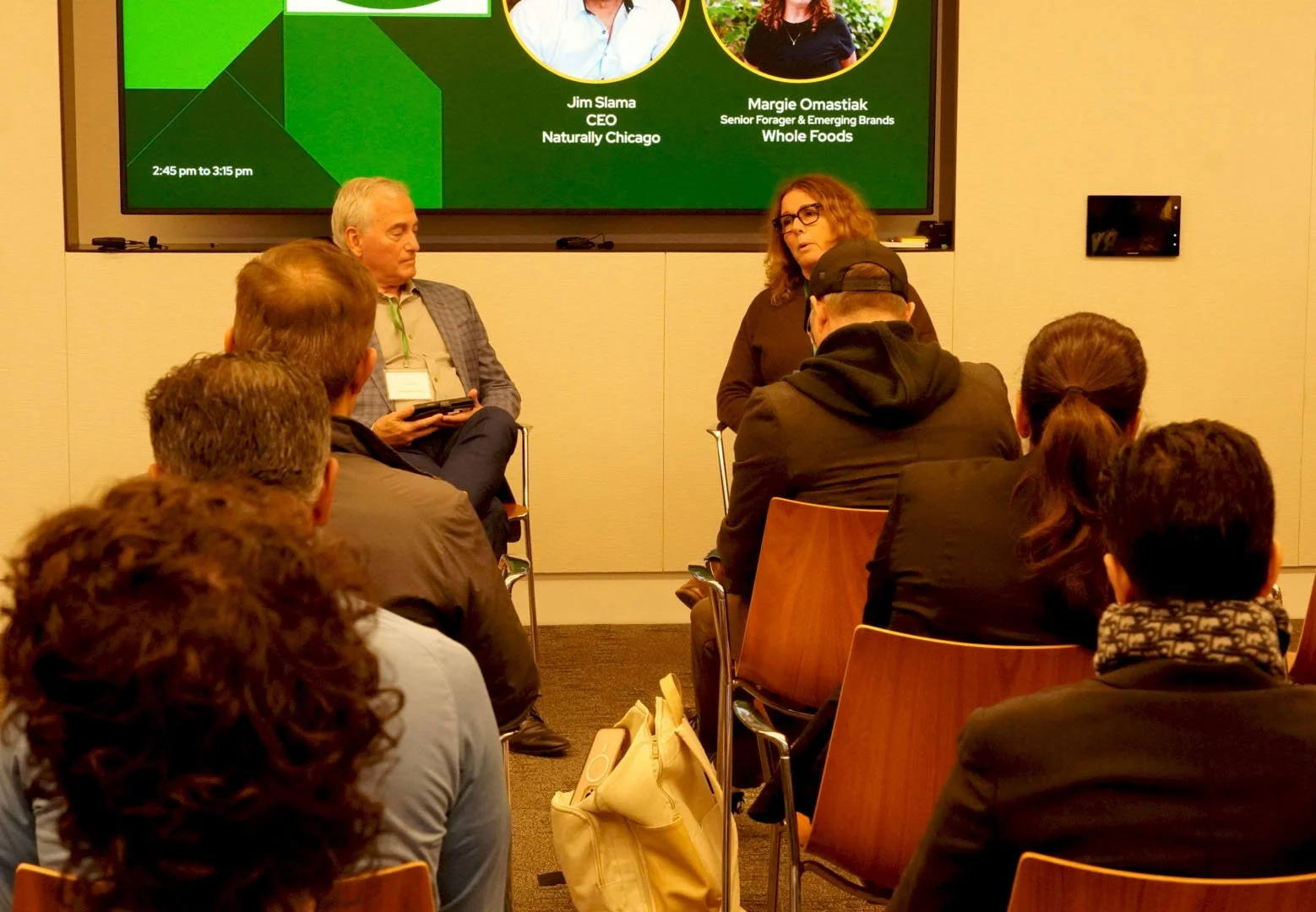
Photo by Bob Benenson
What Counts as Innovation
Asked what Whole Foods looks for as innovation, Margie posed a series of questions for founders to answer. Is the product really new? Is it solution-driven, such as saving a shopper 20 minutes in the day? Is it better for you, and/or made with fewer ingredients? Does its packaging support the chain’s zero-waste and sustainability mission? And does it fill a need shoppers haven’t yet found a product for?
Her example was Lazy Food, a pasta product launched through the chain’s Local and Emerging Accelerator Program, known as LEAP. The end dish wasn’t groundbreaking, she said, but the brand offered a time-saving solution that leaves more time for friends and family: “It was bringing a solution to the people that really want it, and the product’s done very well.”
She acknowledged that “innovation” can be a subjective word, much like “authenticity.” Her advice was to ask what would make a customer say, “I want to try this.”
Be the Trend
Margie said more than 50 people contribute to the annual Whole Foods Market Trends Report, including her forager team, which draws on social media and everything else it hears and reads. This year’s report was published in October. She said the chain’s foragers see trends as something to discover, not create.
She pointed to two trends in the latest report. One is terroir, or a taste of place, which she said applies directly to local brands. It reflects shoppers’ desire to connect with family, friends and hometown products. The other is simple ingredients. Whole Foods bans more than 300 ingredients deemed inconsistent with the chain’s better-for-people-and-the-planet ethos, so “the less ingredients you have in a product… the better.”
She cited Rao’s marinara sauce, which she first dismissed as just another red sauce. It succeeded, she said, because it was simple, clean and tasted good, even at a high price point.
Her advice to founders on trends: “Don’t chase them; just be them.”
What “Ready” Means
In the days when Whole Foods was still an independent company (meaning before its 2017 purchase by Amazon), a brand could sell its way onto the chain’s shelves going store by store through local team members.
Those days are over, Margie said. Today’s review process is collaborative, and the goal is a spot in a planogram, a diagram or model that indicates the placement of retail products on shelves in order to maximize sales.
So the products’ numbers have to work. Brands must offer something exciting that fills a white space — meaning providing a solution to an unmet consumer need — with a clear strategy, clear margins and profitability, and an understanding of what scaling means.
Founders should also be able to say where their raw ingredients come from and be ready to pivot if supply problems arise. “Those are not our problems,” she said. “Our problem is making sure that product comes in, we approve it, it gets on the shelf, and it is there consistently.”
She added that staying local is a legitimate choice. “You can make a choice to stay right where you’re at.” But a brand can’t be a “me-too.” She said: “We have enough. You have to be different.”
LEAP and On the Verge
The discussion turned to Whole Foods’s selective programs to help especially promising brands succeed.
First up was the Local and Emerging Accelerator Program (LEAP), which Margie called “fabulous.” It has two tracks.
The first is for brands not yet on Whole Foods shelves. It drew about 2,000 applications last year for 14 spots, so most applicants never hear back. Even so, she said, an application puts a brand in front of Whole Foods, and she has pulled brands from the applicant pool to contact during later category reviews.
The program is a free 12-week mentoring course in which foragers, merchants, vice presidents and staff from finance and marketing share what they know. It ends with a launch in Whole Foods’ metro or regional store. As the current cohort has already been chosen, Margie advised founders to watch the chain’s Supplier Portal for the next call, which usually opens early in the year but came in almost April this year.
The second track, On the Verge, is for brands already on the shelves that show growing velocities. Whole Foods nominates about 10 brands and they can get extra help, including financing. A brand that went through the early growth cohort can’t move into On the Verge, which Margie said is to “spread the wealth.”
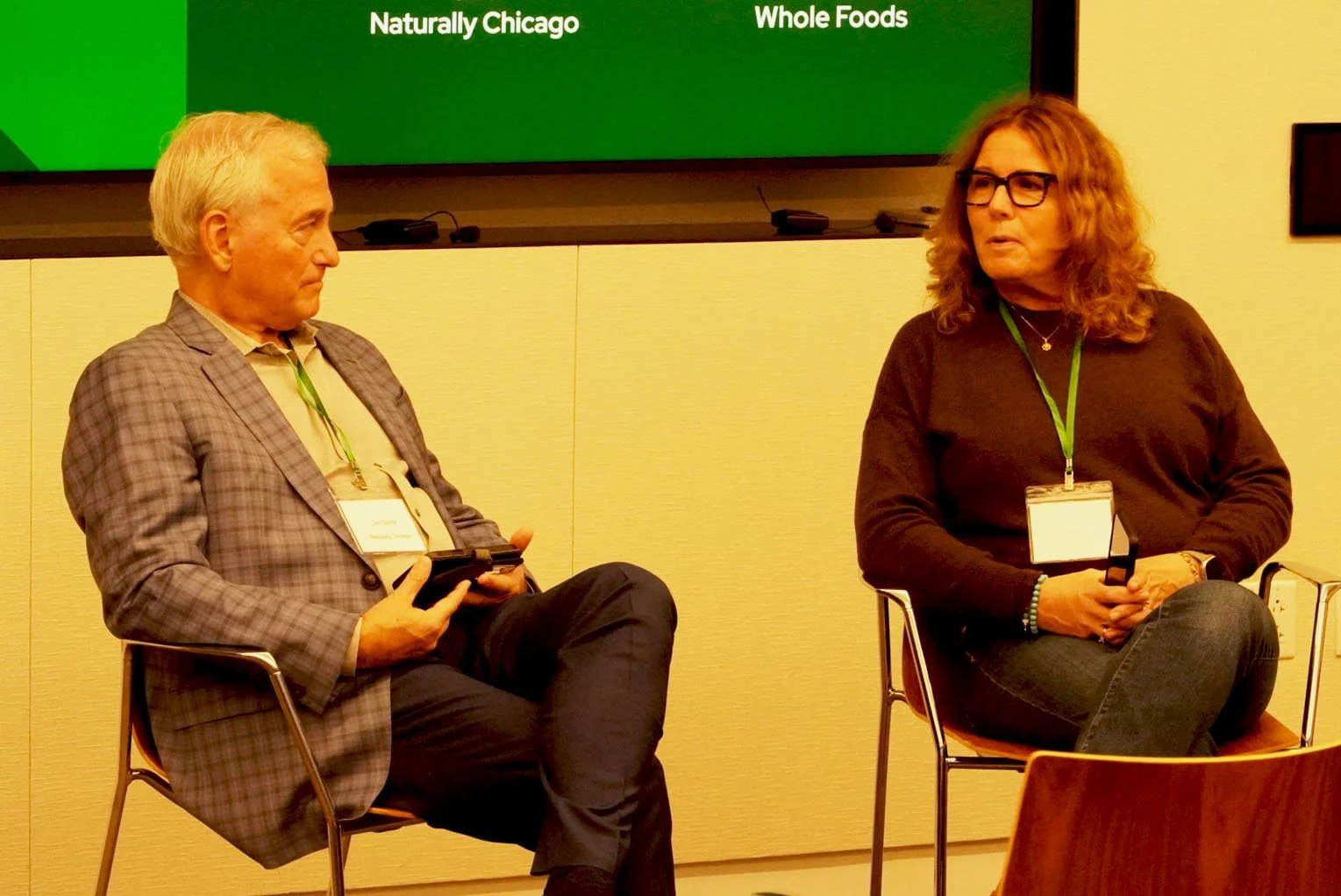
Photo by Bob Benenson
From Local to National
Whole Foods Market has several routes up for brands, upon which Margie elaborated. A product can start with a forager in one metro area, expand to its region, then to multiple regions, and then go national. Or a Whole Foods merchant who sees a brand doing well can pull it up faster.
She said the emerging side of the business means “the pathway is yours to choose.” She added that “if you can sell your product in Chicago, you can sell your product pretty much in the West Coast.”
She said it all comes down to sales: “The product has to sell. Our customers have to love it.” Her advice was to focus on what you can deliver.
Margie cited Daybird, a beauty brand that Jim Slama introduced her to. She and Daybird worked together for almost two years before it launched in Whole Foods stores in Chicago and New York, where beauty shoppers were most likely to seek it out.
Two Success Stories
Omastiak told two stories of brands that grew beyond the Midwest.
One was Geem, the Korean-style seaweed snack founded by Candice Choi. Candice applied to LEAP two years in a row and was not looked at the first time. Margie recalled being followed around an event by Candice pleading for two minutes of her time.
She already knew who Candice was, and the two worked together as the founder moved production to a co-manufacturer overseas. That meant the brand was no longer local, but Candice explained she did so because she couldn’t find a U.S. co-man that could get her products exactly how she wanted them. Margie said she assured Candice that Geem wouldn’t be dropped.
They also worked on packaging. Geem launched in the Midwest through LEAP, later went to California and expanded to multiple states in July. “She’s out of my hands now,” Margie said wistfully. “That’s also something that happens when you’re successful.”
The other brand was Pacha, a soap maker based in Nebraska that began in a former bank building, where it cured bars in the old vault. Founders Andrew and Abby were just out of college when Margie met them, and she said she and her team pushed them through many rounds of product tweaks, including better scents. Today, she said, Pacha is “a multi-million dollar company” with a global presence. Andrew was happy to speak to her LEAP cohort when she called him last year.
Staying on Shelf
Margie said that for a brand, getting on shelf is the start of the work. She noted that a statistic mentioned earlier in the day said products get discontinued within a year or two.
Her advice: run demos, talk to customers, have others speak for you, run promotions, keep innovating, and stay in touch with buyers. She noted that in-store teams are leaner than they used to be, and founders should have a clear pitch to tell team members why their product is worth selling. When one flavor in a three-flavor launch lags, she said, brands should talk to buyers about swapping it out.
“It’s not the end of the race; it’s just the beginning,” she said. “They earn the shelf space,” she said of the sales velocities. She also said she pushes merchants to give her velocity goals, and she told brands to aim for the high end of the range, not the average.
She cautioned that wanting to be in Whole Foods isn’t enough: “I have told many brands, you do not want to be Whole Foods Market” until they are ready. “It is not about getting someone in on the shelf to see them fail.”
Q&A
Taste. Asked what she looks for, Margie said taste matters. If a product looks right but the flavor misses, she says so, while stressing that it’s only her opinion and founders can counter it. She sees herself as an advocate who must believe in a product to sell it to merchants.
White space. White space is defined by what the chain doesn’t already carry. In frozen pizza, another Detroit-style entry like Buddy’s or Mazza wouldn’t qualify. A Nepalese pizza she was shown would. The aim is to grow a category, not trade one product for another.
Testing. Whole Foods no longer does one-store tests. It can test in a metro area, such as eight Michigan stores, and not all of them might carry a product. Typically a Chicago launch goes into all Chicago-area stores, though Daybird was an exception.
Prior to a post-event reception, the session closed with a welcome from Adam Chrusciel, a credit officer at Bank of America. He said the bank focuses on emerging food and beverage brands and offers credit, card processing, equipment financing and employee benefits.